Cold Storage Pallet Racking in Baltimore: What Maryland Warehouses Need to Know
10 min read · May 2026 · Baltimore Pallet Rack Team
Cold storage and refrigerated warehouse racking is a specialized field that sits at the intersection of structural engineering, fire protection, food safety, and extreme operating environments. The Baltimore and Maryland corridor — particularly the Jessup, Linthicum, Glen Burnie, and Halethorpe submarkets near BWI Airport — hosts a significant concentration of refrigerated and frozen warehouse space. Specifying and installing racking in these environments requires different materials, different fire suppression coordination, and different load documentation than ambient warehouse racking.
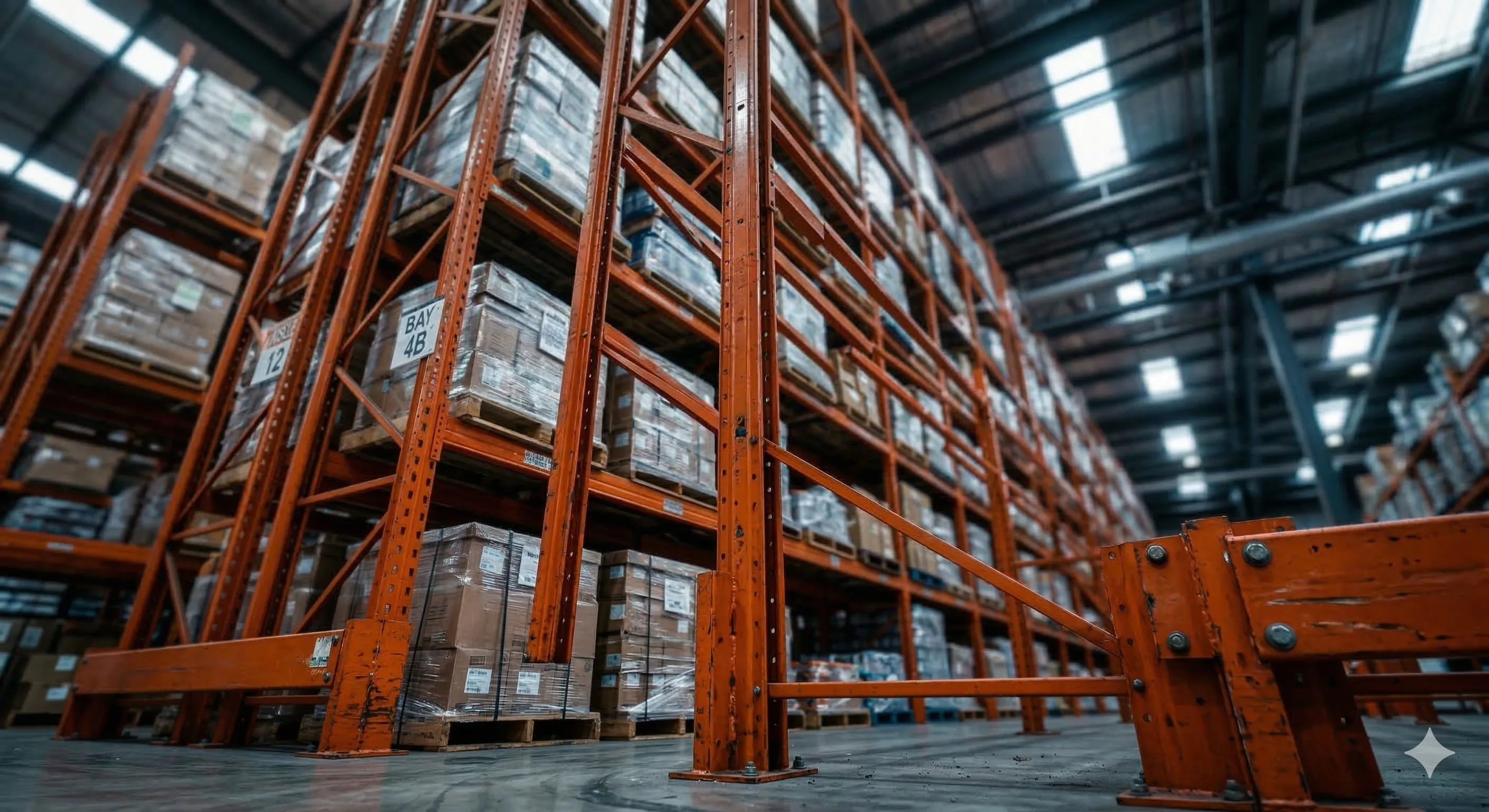
Cold Storage Specification Note
Cold storage racking requires coordination between your racking installer, your fire protection engineer, and your refrigeration system designer. These three systems interact significantly — changes to one can require re-engineering of the others. Baltimore Pallet Rack coordinates all three disciplines for cold storage projects throughout the Baltimore metro. Call (240) 290-6544 to discuss your project.
Maryland's Cold Storage Warehouse Submarkets
The Baltimore metro's cold storage market is concentrated in a specific geographic corridor aligned with major transportation infrastructure and the BWI Airport air cargo complex:
Jessup: The Heart of Maryland Cold Storage
Jessup, Maryland, straddling the Howard County/Anne Arundel County line along I-95 between Baltimore and Washington, is the densest concentration of cold storage and refrigerated warehouse space in the state. The Jessup logistics park hosts food distribution operations for major grocery chains, broadline foodservice distributors, and specialty cold chain operators. Proximity to both I-95 and the Baltimore-Washington Parkway (MD-295) gives Jessup facilities efficient truck access to both metro areas simultaneously. Howard County and Anne Arundel County both issue permits for facilities in this corridor, depending on the specific address.
Linthicum and Glen Burnie: BWI Air Cargo Cold Chain
The cluster of industrial facilities surrounding BWI Airport in Anne Arundel County hosts cold chain operations serving BWI's air cargo complex. Pharmaceutical cold chain, perishable food imports, and temperature-sensitive healthcare products all move through this corridor. Linthicum and Glen Burnie facilities typically operate temperature-controlled zones ranging from pharmaceutical-grade +2°C to +8°C environments to conventional -18°C frozen food storage, and often in the same building.
Halethorpe and the I-95 Corridor
Halethorpe, in the southern portion of unincorporated Baltimore County along I-95, hosts a mix of refrigerated and ambient warehouse space serving Baltimore's food distribution market. Legacy industrial buildings in this corridor often have lower clear heights (20 to 26 feet) than newer Jessup or Linthicum construction, which affects cold storage racking configuration options.
How Cold Temperatures Affect Steel Racking
Steel rack components perform reliably across the temperature ranges encountered in commercial cold storage — from conventional freezer temperatures (-18°C / 0°F) to blast freezer environments (-30°C to -40°C). However, temperature has real effects on racking that installers and operators need to account for:
Thermal Contraction and Expansion
Steel contracts as it cools. In a large cold storage facility where uprights may run 30 to 40 feet tall, the dimensional change between ambient installation temperature and operating freeze temperature is measurable. Properly designed cold storage racking accounts for this thermal movement in the anchor design and in the clearances between rack components and building elements. Anchoring rack in a cold storage environment requires coordination with the slab engineer, as the cold slab conditions affect anchor holding strength differently than ambient conditions.
Condensation and Corrosion in Freeze-Thaw Cycles
The freeze-thaw cycle at the interface between refrigerated and ambient zones — particularly around dock doors and airlock areas — creates condensation conditions that accelerate corrosion on standard painted steel rack components. This is distinct from the salt-air corrosion concern at port-adjacent facilities but produces similar results: accelerated rust, base plate deterioration, and shortened component service life.
The affected zone is typically the first two to three rack bays inside the refrigerated space from any exterior wall or dock door. Galvanized uprights and hardware in this zone — even if the rest of the cold storage racking uses standard painted components — significantly extends service life and reduces maintenance costs.
Load Capacity Documentation in Cold Environments
Cold storage racking load documentation must account for the actual operating conditions. Load capacity ratings for rack components are established at ambient temperature and remain valid at the temperature ranges encountered in conventional cold storage. However, the load certification process must document the intended temperature range, and any deviations from standard testing conditions need to be reviewed by the PE of record. Maryland building departments — including Anne Arundel County and Howard County, which cover the Jessup corridor — expect load capacity documentation that reflects actual cold storage operating conditions.
Galvanized Rack Requirements in Cold Storage
For cold storage applications in the Baltimore metro, galvanized rack finishes are the appropriate specification in several specific situations:
- Blast freezer environments: The condensation cycle in blast freeze operations is extremely aggressive — galvanized or stainless steel specifications are standard for blast freeze racking
- Dock-adjacent rack bays: As described above, the condensation zone near exterior walls and dock doors warrants galvanized uprights and hardware even in facilities that use standard painted rack in the main storage volume
- Facilities with floor wash-down procedures: Cold storage facilities that regularly wash down floors with high-pressure water — common in food-grade cold storage — expose rack base plates and lower uprights to standing water, accelerating corrosion on standard painted components
- Seafood and wet protein storage: The combination of high humidity, salt-bearing product (seafood, cured meats), and cold temperatures is among the most aggressive environments for rack corrosion — galvanized specification throughout is appropriate
NFPA 13 Cold Storage Flue Space Requirements
Fire suppression in cold storage environments is significantly more complex than in ambient warehouses, and the interaction between rack configuration and sprinkler system design is among the most technically demanding aspects of cold storage racking projects.
Why Flue Spaces Matter More in Cold Storage
NFPA 13 (Standard for the Installation of Sprinkler Systems) requires longitudinal and transverse flue spaces in pallet racking to allow fire suppression water to penetrate to lower rack levels. In ambient warehouse applications, this means standard 6-inch transverse flue spaces and 6-inch longitudinal flue spaces between rack rows.
Cold storage applications complicate this in several ways:
- Tightly packed frozen product: Frozen product, particularly in cases and cartons stacked tight against each other, can obstruct water penetration more effectively than ambient palletized goods. NFPA 13's cold storage provisions require larger or more carefully maintained flue spaces in some high-piled frozen storage configurations
- In-rack sprinkler systems: High-bay cold storage (above approximately 25 feet) typically requires in-rack sprinkler systems in addition to ceiling-level sprinklers. In-rack sprinkler heads are installed within the rack structure itself, between storage levels, and the rack design must incorporate specific mounting provisions and clear zones for these heads
- Rack configuration affects suppression system design: The commodity class, storage height, and rack configuration collectively determine whether ceiling-level sprinklers alone are adequate or whether in-rack suppression is required. A change in rack configuration — moving from selective to drive-in, for example — can change the sprinkler system requirement entirely
CMDA vs. ESFR in Baltimore Cold Storage
Ceiling-level sprinkler systems in cold storage facilities are typically either Conventional/CMDA (Central Monitor Density Area) or ESFR (Early Suppression Fast Response) designs. The choice affects rack configuration requirements:
- CMDA systems: Require more careful coordination of rack row spacing and flue space to ensure adequate water distribution to lower storage levels. In-rack sprinklers are more commonly required with CMDA systems in high-bay cold storage
- ESFR systems: Deliver higher water flow rates at ceiling level, which in some cold storage configurations can eliminate or reduce the in-rack sprinkler requirement. However, ESFR systems require specific flue space maintenance — product stacked in flue spaces can compromise ESFR suppression effectiveness and trigger a fire marshal violation
For cold storage projects in the Jessup and Linthicum submarkets, Baltimore Pallet Rack coordinates directly with the facility's fire protection engineer to ensure rack configuration, flue space specifications, and sprinkler system design are aligned before installation. Our rack inspection services also include flue space compliance verification for existing cold storage installations.
Drive-In Rack in Cold Storage: High Density with Trade-offs
Drive-in racking is the dominant configuration in high-density cold storage facilities. By eliminating aisle space between storage positions, drive-in rack can achieve 60 to 75 percent cubic utilization — compared to roughly 45 percent for selective rack — which is critical in cold storage where every cubic foot of refrigerated volume represents significant operating cost (energy, maintenance, depreciation).
The trade-offs for cold storage operators in the Baltimore corridor:
- LIFO inventory rotation: Drive-in rack operates on a last-in, first-out basis. For frozen food products with long shelf lives, this may be acceptable. For fresh or perishable products with tight date rotation requirements, drive-through rack (FIFO access) or pallet flow systems are required
- Forklift requirements: Drive-in rack requires forklifts to enter the rack lane, which demands articulated or reach truck configurations and very precise operator control. Forklift impacts are more common in drive-in cold storage than in selective racking, and corrosion compounds the damage — galvanized uprights are even more important in drive-in cold storage configurations where forklift impact frequency is higher
- Fire suppression complexity: Drive-in rack configurations eliminate the standard longitudinal flue spaces that NFPA 13 relies on for water penetration. This typically requires in-rack sprinkler systems specifically designed for drive-in configurations — a more expensive and complex installation than standard ceiling-level suppression
BWI Air Cargo Cold Chain: Pharmaceutical and Perishable Racking
The BWI Airport cargo complex in Anne Arundel County handles a significant volume of temperature-sensitive air freight — pharmaceutical products, biological materials, fresh seafood, cut flowers, and other perishables. Warehouse facilities serving BWI air cargo cold chain operate under stricter regulatory requirements than conventional food distribution cold storage:
- GDP (Good Distribution Practice) compliance: Pharmaceutical cold chain facilities must comply with GDP guidelines, which include specific requirements for temperature-controlled storage zones, monitoring systems, and documentation. Racking in GDP-compliant facilities must support validated temperature mapping and product segregation requirements
- IATA CEIV Pharma certification: Many BWI air cargo cold chain operators pursue IATA CEIV Pharma certification, which requires specific facility standards including documented procedures for racking configuration, loading, and temperature management
- FDA facility registration: Food-handling cold storage facilities at BWI must be registered with FDA under the Food Safety Modernization Act (FSMA), with racking specifications meeting sanitation and traceability requirements
- FAA Part 77 height considerations: Facilities in the BWI flight path may face height restrictions under FAA Part 77 regulations. This is primarily relevant for mezzanine installations and high-bay racking in buildings near the airport boundary — our engineering team verifies Part 77 compliance as part of every BWI-area racking project
For more on racking in the Linthicum and BWI corridor, see our Linthicum pallet racking page.
Checklist: Cold Storage Racking in Maryland
Before finalizing a cold storage racking specification for a Baltimore metro facility, confirm these items:
- Galvanized or epoxy-coated uprights specified for dock-adjacent zones and blast freeze environments
- All hardware (anchors, clips, row spacers) specified as hot-dip or mechanical galvanized
- Load capacity documentation accounts for cold operating temperature range
- Fire protection engineer has reviewed rack configuration against NFPA 13 cold storage provisions
- In-rack sprinkler mounting provisions included in rack design if required by fire protection engineer
- Flue space requirements specified in the racking layout drawings and communicated to operations team
- Forklift type verified against rack aisle width and drive-in lane specifications
- Permit submitted to correct jurisdiction (Anne Arundel County for Jessup/Linthicum south of I-195; Howard County for Jessup north of I-195)
- FDA, GDP, or IATA compliance requirements reviewed against final racking specification (for pharmaceutical and perishable air cargo facilities)
Cold Storage Racking Specialists for the Baltimore Corridor
Baltimore Pallet Rack designs, supplies, and installs cold storage racking for facilities throughout Jessup, Linthicum, Glen Burnie, Halethorpe, and the entire Baltimore metro. We coordinate fire protection engineering, manage permits with Anne Arundel and Howard County, and specify galvanized components for every cold environment. Call (240) 290-6544.
Discuss Your Cold Storage ProjectRelated Services & Areas
Ready to Optimize Your Warehouse?
Get a free estimate from Baltimore's warehouse racking experts. We serve warehouses of all sizes throughout the Baltimore, MD metro area.